

What is gay surrogacy and how is it different from other surrogacy?
Gay surrogacy is gestational surrogacy for gay intended parents. An embryo is created by IVF from an egg donor's egg and one intended father's sperm, then transferred to a gestational surrogate. The surrogate carries the pregnancy. She has no genetic link to the child. In a Private Label Surrogacy journey, the surrogate is never the egg source.
The medical and legal process is the same one every PLS family follows. The surrogate is screened the same way. Escrow works the same way. The agreement is drafted by independent attorneys the same way. What differs for two dads comes down to four decisions that other intended parents may not face:
- You need an egg donor as well as a surrogate. Two men need both. That adds a match, a medical cycle for the donor and a line in the budget.
- You decide whose sperm to use. One partner, the other, or both, by splitting the donor's eggs between you.
- Both fathers need legal parentage. The non-genetic father's parentage is secured by court order, not by biology. Where the surrogate delivers decides how.
- The surrogate must be open to your family. Most surrogates are. PLS confirms it before you are introduced.
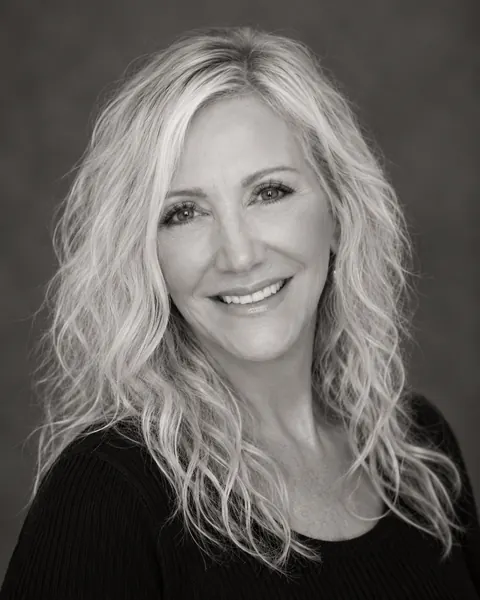
This page is written by Nancy Block, RN, who founded PLS in 2017. Before that she spent 17 years as an OB/GYN and fertility nurse and staff educator at Northwestern Memorial Hospital's Prentice Women's Pavilion, and in 2000 she founded The Center for Egg Options Illinois, an egg donation and surrogacy matching program she ran for 15 years. Since 2000, she has made more than 4,000 matches. She is a former Co-President of SEEDS, the Society for Ethics in Egg Donation and Surrogacy. Nancy is involved in every match and oversees it.
PLS has matched same-sex couples, single parents by choice and LGBTQ+ parents from the US and abroad since 2017. Gay couples and single parents have completed journeys with PLS.
What are the steps for two dads, from egg donor to birth?
The full journey typically takes 18 to 24 months. Most journeys run closer to 24 months from start through delivery. It runs in six steps. Several overlap, which is where most of the time is saved.
1. Consultation, signing and escrow. Your first meeting is about an hour by video with Nancy, often with Mark. You agree on a plan and sign with PLS. Your money is held by an independent licensed escrow company, not by PLS. Escrow generally opens after medical clearance. Costs that come before that are invoiced to the intended parents directly, not through escrow. You may choose your own escrow company.
2. Egg donor match. You choose an anonymous or known donor. A known donor, such as a sister or cousin of the non-genetic father, is possible with medical screening, a psychological consult and her own attorney. In most journeys the egg donor cycle comes first: her eggs are retrieved, embryos are created and usually frozen, often after chromosome testing, and the transfer to your surrogate follows.
3. Embryo creation. Your clinic retrieves the donor's eggs, fertilizes them with sperm from one or both fathers, and grows the embryos to the blastocyst stage. Whether to test embryos is a decision between you and your doctor, and clinics name the testing differently. The embryos are frozen until the surrogate's transfer cycle.
4. Surrogate match and agreement. Nancy introduces you to a surrogate who has already said yes to a two-dad family. If both sides accept, each retains its own attorney and the attorneys draft the gestational carrier agreement. You pay for both attorneys. Nothing medical starts until the agreement is signed.
5. Medical cycle and transfer. The surrogate's medical cycle takes 2 to 3 months, ending in a frozen embryo transfer at your clinic. The pregnancy test is 9 to 11 days after transfer.
6. Parentage and birth. Your attorney secures parentage for both fathers, before birth where the state allows it. PLS coordinates a birth plan with the delivering hospital so staff know who the fathers are before labor begins.
For each step in more detail, including who does what and how long each part takes, see how surrogacy works for two dads.
Whose sperm is used, and how do both fathers become legal parents?
Each embryo has one genetic father. There is no way to combine two men's sperm in one embryo. That leaves two common choices:
- One father's sperm for all embryos. Simplest. Couples often decide by age, sperm quality or a plan to use the other father's sperm for a second child.
- Split the donor's eggs. Half the eggs are fertilized with each partner's sperm, so you have embryos from both fathers in storage. You then transfer embryos from each in separate pregnancies.
Whichever you choose, using the same egg donor for both fathers means your children share a genetic mother. Many two-dad families value that.
Under Illinois law, the genetic link does not decide who the legal parents are. The Illinois Gestational Surrogacy Act (2005) makes compensated gestational surrogacy agreements enforceable and provides pre-birth parentage for the intended parents. The Equality for Every Family Act, signed in December 2025, removed the earlier requirement that at least one intended parent contribute an egg or sperm, and it requires independent counsel for both sides.
In practice, both fathers are named as legal parents through a pre-birth process in Illinois, so the original birth certificate names both. Many attorneys also recommend a confirmatory adoption or judgment for the non-genetic father, because every US state and every foreign country must honor a court judgment, while not all honor a birth certificate alone.
Your attorney, not the agency, advises on which documents your family needs. PLS does not employ attorneys. PLS refers you to independent attorneys, escrow companies, insurance agencies (including surrogate-friendly policies) and fertility clinics when you need them. You choose which providers to use. The surrogate has her own attorney. For the full comparison of a pre-birth order and a second-parent adoption, see how both dads become legal parents.
What does gay surrogacy cost and how long does it take?
Surrogacy for two dads typically costs $150,000 to $210,000 all-in, including egg donor costs. It typically takes 18 to 24 months from signing to birth.
| Item | Typical range | Paid to | Months in this phase |
|---|---|---|---|
| PLS program fee | $47,500* | PLS, in three payments | First payment when you sign the agreement; second payment at matching; third payment at medical clearance by the fertility center |
| Item | Typical range | Paid to | Months in this phase |
|---|---|---|---|
| Egg donor compensation and donor costs | Total donor-side costs about $12,935 to $18,835. Amounts vary by provider; confirm current quotes before you commit | Donor, through escrow | Her cycle comes first and adds about 3 to 6 months |
| IVF, embryo creation and storage | Set by your clinic | Your fertility clinic | Usually completed before the surrogate's medical cycle |
| Surrogate compensation package | Typically $68,000 to $78,000* total, on a $60,000* first-time base | Surrogate, through escrow | Signing to after delivery |
| Third-party costs | $15,300 to $29,000 | Attorneys, escrow agent, psychologist, background check, insurance review, travel, monitoring | Match to parentage order |
| Surrogate health insurance, if needed | $5,000 to $40,000 | Insurer | Only if her plan excludes surrogacy |
These costs are estimates and may vary. Only PLS program fees are fixed.
How the months break down:
- Signing to surrogate introduction: On average, intended parents are matched about nine months after signing. It depends on the clinic's criteria and on what you are looking for in a surrogate. Matching timelines vary with the fertility clinic's criteria and with what intended parents and surrogates are looking for.
- Legal and medical foundations: the legal phase (agreements signed) usually takes four to six weeks after match, alongside screening at your clinic.
- Medical cycle: 2 to 3 months, ending in the transfer.
- Pregnancy test: 9 to 11 days after transfer.
- Pregnancy: about 9 months.
When each part is due:
- PLS program fee. $47,500*. It is paid in three payments: first payment when you sign the agreement, $22,500*; second payment at matching, $20,000*; third payment at medical clearance by the fertility center, $5,000*.
- Escrow. Surrogate compensation and most third-party costs are paid out of the escrow account. Escrow funds are held separately by an independent licensed escrow company and do not belong to PLS.
- Clinic. IVF, embryo creation and storage are billed by your clinic directly, on its own schedule.
The egg donor adds cost that a heterosexual couple using their own eggs does not pay. It also adds time: if you need an egg donor, her cycle comes first and adds about 3 to 6 months.
Where does the range come from? Mostly from three things: how many IVF cycles you need to get the embryos you want, whether the surrogate's health plan covers surrogacy, and how complex the legal work is, especially for international fathers. Building your budget toward the top of each range covers most surprises.
Help with cost exists. PLS points intended parents to grant and support programs from Gift of Parenthood, the Coalition for Family Building, EMD Serono, FertilityIQ and RESOLVE. Men Having Babies, a nonprofit for gay fathers, runs a Gay Parenting Assistance Program that offers grants and provider discounts to qualifying applicants. PLS has no formal affiliation with Men Having Babies; it is listed here as an external resource. Apply to each program directly.
For the full itemized budget, see the cost of surrogacy for gay couples.
How does egg donation fit with a PLS surrogacy journey?
Two dads and single fathers need an egg donor as well as a surrogate.
In most journeys the egg donor cycle comes first: her eggs are retrieved, embryos are created and usually frozen, often after chromosome testing, and the transfer to your surrogate follows.
Which states and clinics are safe for LGBTQ+ parents?
A state is safe for LGBTQ+ intended parents when its statute or settled law grants parentage to intended parents regardless of marital status, sexual orientation or genetic link, and when compensated gestational surrogacy agreements are enforceable there. The law that matters most is the law of the state where the surrogate delivers.
Illinois meets that test. The Gestational Surrogacy Act (2005) enforces compensated agreements and provides pre-birth parentage, and the Equality for Every Family Act (December 2025) removed the genetic-link requirement.
Other states have moved too. Michigan legalized compensated surrogacy in April 2025. New York licenses surrogacy agencies; PLS is preparing its license application.
PLS places surrogates only in surrogacy-friendly US states, and counsel reviews the surrogate's state before you match. You do not have to live in that state. Two dads in another state, or another country, regularly match with an Illinois surrogate.
A fertility clinic is a good fit for two dads when it:
- Publishes its policy on treating same-sex couples and single patients
- Has run split sperm cycles for two-dad couples before
- Uses intake forms written for two fathers, not adapted from forms for a mother and father
- Coordinates easily with an egg donor program and a surrogacy agency in another state
PLS works with most US fertility clinics. You do not have to use a particular clinic.
What about single men, single women, lesbian couples and transgender parents?
The same process works for every LGBTQ+ intended parent. What changes is which gametes are used and, sometimes, which legal route applies.
Single men. A single father needs an egg donor and a surrogate, exactly like two dads, and his sperm creates the embryos. Illinois law does not require intended parents to be married or partnered, and a pre-birth order can name a single father as the sole legal parent. PLS matches single fathers by choice from the US and abroad.
Single women. A single woman who cannot carry a pregnancy, or chooses not to, can use her own eggs or donor eggs with donor sperm, and a gestational surrogate carries. If she has frozen eggs or embryos, those are often the starting point.
Lesbian couples. Two women often have options two men do not. One partner may provide the eggs, with donor sperm, and a surrogate carries when neither partner can or should carry. Some couples use one partner's eggs for one child and the other partner's for the next. Under Illinois law since the Equality for Every Family Act, both mothers receive the same pre-birth parentage regardless of which partner is the genetic parent.
Transgender and nonbinary parents. Your clinic advises on whether your own stored eggs or sperm are available and suitable, or whether donor gametes are the better path. Illinois parentage under the Gestational Surrogacy Act, as amended in December 2025, does not depend on a genetic link. Your attorney makes sure the parentage documents use your legal name and correct designation.
In every case PLS uses the same screening, the same escrow and the same agreement standards. Surrogates are asked about openness to your family before you meet, so you are introduced only to surrogates who have already said yes.
What about gay couples living outside the United States?
For gay couples whose home country restricts surrogacy or does not recognize two fathers, the United States offers enforceable agreements and pre-birth parentage in states like Illinois. PLS works with intended parents abroad as well as across the US.
Three things are different for you:
- Your home country decides how it recognizes your parentage. Some countries register the US birth certificate directly. Some require the non-genetic father to adopt at home. Some restrict surrogacy but still recognize the child's rights. PLS refers you to counsel in your home country early, before you match.
- Your child's US citizenship and passport. A child born in the US has historically received US citizenship at birth and a US passport within weeks. Two non-citizen fathers should talk with immigration counsel before signing.
- Logistics. You pay in US dollars by wire to the independent escrow agent. Most steps are remote. Most international parents come to the US only for the birth, and parents who can attend the transfer usually need a day. Plan for more than four weeks after the birth: documents for the trip home often take longer.
Jan Telman Berman, PLS's Global Surrogacy Coordinator, manages every international cycle. She has more than 18 years of experience and a background in women's health clinics. Nancy has spoken at assisted reproduction conferences in the US, China, Israel and Europe. See international surrogacy.
How does PLS run an LGBTQ+ journey?
The same way it runs every journey, under one published standard. An LGBTQ+ journey is not a separate program with a separate price. These are the parts that make it work:
Nancy is involved in every match and oversees it. Your case manager manages the day-to-day journey. Nancy has done egg donation and surrogacy matching since 2000.
Surrogates are asked first. Every PLS surrogate is asked at intake whether she is open to same-sex couples and single intended parents. You are introduced only to surrogates who have said yes.
A doctor reviews the surrogate's available records. Mark Silverberg, DDS, MD, reviews the surrogate's available medical records before she is presented to you. His summary is confidential: only PLS and your clinic receive it.
Your surrogate is a partner. Her case manager, Natalie Gaudio-Fricano or Jenni Symons, has been a surrogate herself and manages the day-to-day journey from introduction to delivery. Mental-health support comes from independent licensed professionals.
Professionals are independent. PLS does not employ psychologists, attorneys or escrow staff. It refers you to independent licensed professionals on purpose, so each one answers to the person they were hired to protect. You and your surrogate each have your own attorney.
Money sits in independent escrow. PLS has never held client funds. PLS does not hold funds for surrogate expenses or surrogate compensation. An independent licensed escrow company does. In 2025 and 2026 PLS took on three pro bono cases from another agency.
Your fathers' names are on the birth plan. PLS coordinates with both attorneys and the delivering hospital so that the hospital knows who the parents are before labor begins.
If you have a question before you are ready for a consultation, call PLS at (847) 496-0600 or contact us.
Sources
- Illinois Gestational Surrogacy Act (2005), Illinois General Assembly.
- Equality for Every Family Act, signed December 2025, Illinois General Assembly.
- SEEDS, Society for Ethics in Egg Donation and Surrogacy, of which Nancy Block, RN, is a former Co-President.
- Men Having Babies, Gay Parenting Assistance Program (external resource; no PLS affiliation claimed).