

Who is involved in matching at PLS?
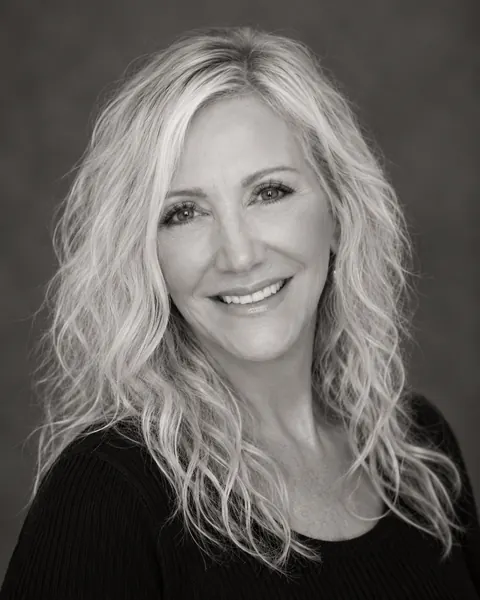
Nancy Block, RN, is involved in every match at Private Label Surrogacy and oversees it. Your case manager manages the day-to-day journey. Nancy founded PLS in 2017. Before that she founded The Center for Egg Options Illinois in 2000 and ran it for 15 years, matching egg donors and surrogates with families. Since 2000 she has made more than 4,000 matches. Before any of that, she spent 17 years as an OB/GYN and fertility nurse at Northwestern Memorial Hospital's Prentice Women's Pavilion.
Here is what that means for you. No algorithm decides, and no sales team pushes you toward whichever family has waited longest. Nancy puts forward a match only when she believes it will hold through a pregnancy and the relationship after it.
Once a match is proposed, your case manager handles the day-to-day. Natalie Gaudio-Fricano and Jenni Symons are PLS case managers. Both have been gestational surrogates. Natalie delivered a boy for an international couple in 2016. Jenni delivered in 2019 and 2021. They have sat in the chair you are about to sit in.
Matching comes after screening, not before. By the time your profile is shown to anyone, you will have finished the interview, the review of your available medical records by Mark Silverberg, DDS, MD, the background check, the insurance review and the psychological evaluation by an independent licensed professional. The surrogate process overview shows every step in order.
What is on your wish list and why it is binding
In your interview, you tell PLS who you want to carry for. That is your wish list. It covers:
- Family type. A single parent or a couple.
- LGBTQ intended parents. Whether you are open to carrying for them.
- International intended parents. Whether you are open to parents who live outside the US.
- Religion. If it matters to you, say so.
- Number of embryos to transfer.
- Views on termination. Under what circumstances, if any, you would agree to end a pregnancy.
- Contact. How much contact you want with the parents during the pregnancy and after the birth.
Your wish list is binding on PLS. Your profile is shown only to intended parents who fit it, and PLS never asks you to compromise on those requests to make a match happen faster.
There is a practical reason for that rule, not only a respectful one. The items on your wish list end up in the contract. If you and the parents disagree about termination, contact or the number of embryos, that disagreement does not go away after the match meeting. It surfaces in the legal phase, or worse, during the pregnancy. Matching on these points first is how PLS keeps them from becoming problems later.
If your preferences change before you are matched, tell your case manager. Your wish list is updated, and only parents who fit the new list see your profile.
What the intended parents see in your profile
Intended parents see your profile only after you are cleared, and only if they fit your wish list. Profiles are presented one at a time. Your profile typically includes photos, a letter you write to intended parents, a summary of your family and pregnancy history, and your preferences.
Your medical records do not go into the profile. Dr. Silverberg reviews your available medical records before you are presented to intended parents. His summary is confidential: only PLS and the intended parents' clinic receive it, so the doctors who will manage your cycle can review it.
Your contact details and home address are not shared before the match meeting. What you share with the parents after that is your choice, and the contact level you set in your wish list guides it.
What happens in the match meeting
If the intended parents want to meet you after reading your profile, and you want to meet them after reading theirs, PLS sets up a video match meeting. The meeting usually lasts about an hour, and your case manager is present.
You talk about four things: expectations, communication, the birth plan, and the relationship after the birth. The point is to find out, before anyone signs anything, whether you see the pregnancy the same way.
| Topic | Who leads | What should be agreed before legal | Red flags |
|---|---|---|---|
| Introductions and why each side is here | Either side | Nothing yet; this is how you get to know each other | Parents who seem to be meeting several candidates at once without saying so |
| Medical decisions | Parents and surrogate together | Number of embryos to transfer; views on termination | Hesitation or a different answer from the one on the wish list |
| Communication during the pregnancy | Surrogate | How often you talk, by what method, and who attends appointments | Expectations of daily contact that you did not agree to |
| The birth plan | Surrogate | Who is in the delivery room; whether you pump | Pressure on choices that are yours, such as who supports you in labor |
| Contact after the birth | Either side | Updates, photos, visits, or none | Promises neither side is sure it can keep |
| Your family | Surrogate | How your partner and children are involved | Little interest in the people who will live with the pregnancy |
| Next steps and timing | Case manager | Written confirmation from each side within 48 hours | Pressure to decide on the call |
Questions to ask intended parents
You will have your own questions. These help start the conversation:
- Why did you choose surrogacy, and what has the path here been like for you?
- How often would you like to hear from me during the pregnancy, and how?
- Do you want to come to the first ultrasound, prenatal visits, or the birth?
- How do you see contact after the baby is born?
- How many embryos do you plan to transfer, and how many do you have?
- If a transfer does not work, what is your plan?
- How do you feel about the termination decisions we have already matched on? Say it out loud.
- If you live outside the US, how will you handle travel and documents after the birth?
- What would you like my children to know about this pregnancy?
- What worries you most?
Listen for how they answer as well as what they say. A parent who says "we have not decided" on something important is giving you information. So is a parent who asks how your kids are doing.
Bring your partner if you have one. The pregnancy affects your whole household, and your partner should meet the people you are carrying for. See support for your partner and family.
What if you do not feel right about a match?
Say so. Either side can decline after the match meeting, and there is no penalty for either side.
You do not need a dramatic reason. "We did not click" is enough. So is "they want more contact than I can give" or "I am not comfortable with their answer about termination." Tell your case manager, who will pass it on respectfully. You do not have to deliver the message yourself.
If you decline, you go back into matching with your wish list unchanged. If the parents decline, the same is true. If a match falls through later, you are rematched, and any escrow funds are handled under the contract terms.
How long matching takes depends on your preferences and your state. On average, intended parents are matched about nine months after signing. It depends on the clinic's criteria and on what they are looking for in a surrogate. For surrogates, once screening is complete, we set a match meeting, and from application to match usually takes two to three months. Matching timelines vary with the fertility clinic's criteria and with what intended parents and surrogates are looking for.
What happens after you both say yes
Once you and the intended parents both say yes, the match is formed and the legal phase begins. Both sides confirm in writing within 48 hours, and the match is formed when both have confirmed.
- Escrow. Escrow generally opens after medical clearance. Costs that come before that are invoiced to the intended parents directly, not through escrow. PLS never holds your compensation.
- You choose your attorney. You have your own independent attorney, and the intended parents pay for that attorney. Your attorney works for you, not for the parents and not for PLS.
- The contract is drafted and negotiated. Your wish list and the agreements from your match meeting become terms in the gestational carrier agreement. Read what is in the contract.
- Medical screening is scheduled at the intended parents' fertility clinic.
- Nothing medical starts until the contract is signed and escrow is funded.
Your case manager stays with you through each of these steps and the rest of the pregnancy. If you have not applied yet, the first step is the prescreen: see if you qualify.
Sources
- American Society for Reproductive Medicine (ASRM), guidance on gestational carriers and third-party reproduction.