
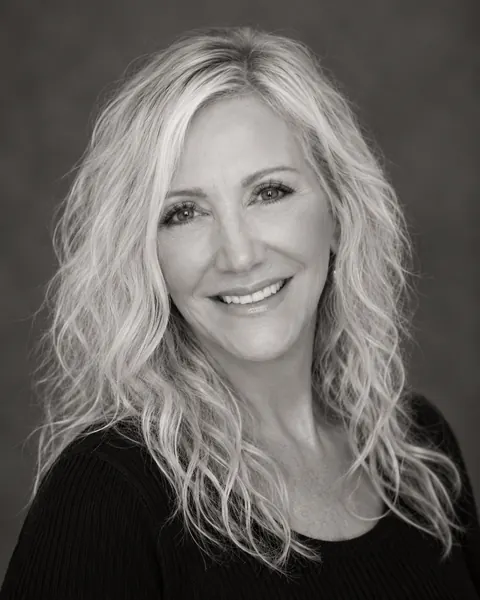

Who runs Private Label Surrogacy and where is the office?
Private Label Surrogacy is led by Nancy Block, RN, who founded the agency in 2017. Nancy is involved in every match and oversees it. Your case manager manages the day-to-day journey. Before PLS she spent 17 years as an OB/GYN and fertility nurse and staff educator at Northwestern Memorial Hospital's Prentice Women's Pavilion, then founded The Center for Egg Options Illinois in 2000 and ran it for 15 years. She is a former Co-President of SEEDS, and has made more than 4,000 matches since 2000.
Mark Silverberg, DDS, MD, is Executive Director. He reviews each candidate's available prenatal and delivery records.
The rest of the team you will work with:
- Jo Ann Levitan, Director of Operations, who was a fertility patient herself before her daughter was born in 2011.
- Jan Telman Berman, Global Surrogacy Coordinator, with more than 18 years managing national and international cycles.
- Natalie Gaudio-Fricano and Jenni Symons, case managers who have both been gestational surrogates.
- Julie Bendix, MPH, RD, LD, CLC, registered dietitian and lactation counselor for PLS surrogates.
The office is in Northbrook, Illinois. Phone (847) 496-0600, email [email protected]. All consultations and appointments are by video. See the Northbrook office page.
What does a Chicago surrogacy agency actually do?
An agency does the work that sits between your fertility clinic and the birth. Your clinic creates embryos and performs the transfer. The agency finds and screens the surrogate, runs the match, and coordinates everyone else until your baby is home.
At PLS that work includes:
- Recruiting surrogates in surrogacy-friendly states and running the seven-step screening.
- Matching, overseen by Nancy, who is involved in every match.
- Coordinating your clinic, the independent attorneys for both sides, the independent escrow agent and the insurance review.
- Case management through birth by a case manager who has been a surrogate herself.
- Mental-health support for the surrogate across the pregnancy.
- The birth plan and hospital coordination.
- Rematching if a match ends before transfer.
What PLS deliberately does not do is employ the psychologists, attorneys or escrow agents in your journey. It refers to independent licensed professionals, because the people who evaluate a surrogate or hold your money should not answer to the agency. That is a conflict-of-interest stance, and PLS has held it since 2017.
Being based in Illinois shapes the work. The Illinois Gestational Surrogacy Act (2005) makes compensated gestational surrogacy agreements enforceable and lets intended parents be named on the original birth certificate through pre-birth paperwork, with no adoption. Since the Equality for Every Family Act was signed in December 2025, intended parents no longer need a genetic link to the child, and both sides must have independent counsel. An Illinois agency builds its timeline around those steps: the agreement is signed before any medication, and the parentage filing is planned for the second trimester so it is ready if the baby comes early.
How does PLS screen surrogates for Chicago intended parents?
Every surrogate goes through the same seven steps, whether she lives in Chicago or another state:
- Online application.
- Interview with a case manager.
- Medical records review by Dr. Silverberg.
- Background check.
- Insurance review of her health plan.
- Psychological evaluation by an independent licensed professional.
- Medical clearance by the surrogate's physician or OB.
The records review is the step most agencies do not have. Dr. Silverberg reviews the surrogate's available medical records before she is presented to you. His summary is confidential: only PLS and your clinic receive it. Your reproductive endocrinologist starts with the available records and Dr. Silverberg's summary, not just a questionnaire.
To apply, a surrogate must be 21 to 43, a US citizen or permanent resident, have a BMI within the clinic's limit, have had at least one healthy full-term pregnancy and be raising a child now. She must be a non-smoker, financially stable and not relying on government assistance, living in a stable home, and not currently taking antidepressant or anti-anxiety medication. A treated, resolved history is reviewed case by case with the clinic.
Which Chicago fertility clinics does PLS work with?
PLS works with most US fertility clinics.
A partner clinic simply has an established workflow with the PLS team. You are not required to use one. PLS coordinates with any licensed IVF clinic you choose, including clinics outside Illinois, and covers the surrogate's travel to your clinic for screening and transfer.
The clinic does the surrogate's medical screening, prescribes her medications, performs the transfer and monitors the early pregnancy. IVF and clinic fees are paid directly to the clinic. See Illinois fertility clinics for how the clinic and agency roles divide.
What does the Chicago program cost and where does the money sit?
Intended parents budget $150,000 to $210,000 with clinic fees and insurance; clinic charges are separate and vary widely from clinic to clinic. Itemized, a PLS journey runs about $131,000 to $155,000 before clinic fees and any new surrogate insurance.
| Item | Amount | When paid | Paid to |
|---|---|---|---|
| Program fee | $47,500* | First payment when you sign the agreement, $22,500*; second payment at matching, $20,000*; third payment at medical clearance by the fertility center, $5,000* | PLS |
| Third-party costs | $15,300 to $29,000 | Through escrow | Attorneys, escrow agent, evaluator, insurance review, travel, monitoring |
| Surrogate health insurance, if needed | $5,000 to $40,000 | Before transfer | Insurance carrier |
| IVF and clinic fees | Set by your clinic | As each step happens | Your clinic |
| Typical total journey | Most journeys land between $150,000 and $210,000 with clinic fees and insurance; clinic charges vary widely | Over 18 to 24 months | All of the above |
The money sits with an independent licensed escrow agent, not with PLS. PLS refers you to independent attorneys, escrow companies, insurance agencies (including surrogate-friendly policies) and fertility clinics when you need them. You choose which providers to use. Surrogate compensation, expenses and third-party fees are paid out of that account under the gestational carrier agreement. PLS never holds client money, and has used independent licensed escrow since it opened. PLS does not hold funds for surrogate expenses or surrogate compensation. An independent licensed escrow company does. See escrow and the Illinois cost breakdown.
How long does matching take right now?
On average, intended parents are matched about nine months after signing. It depends on the clinic's criteria and on what you are looking for in a surrogate. Matching timelines vary with the fertility clinic's criteria and with what intended parents and surrogates are looking for.
PLS states the current wait plainly because it is the longest single stage of most journeys, and you should plan around the real number. After you are matched, the legal phase (agreements signed) usually takes four to six weeks, the medical cycle to transfer takes 2 to 3 months, and the pregnancy test comes 9 to 11 days after transfer. The whole journey typically runs 18 to 24 months. Most journeys run closer to 24 months from start through delivery.
How do Chicago surrogates get matched and paid?
Nancy matches on fit and clinic logistics, not on distance alone. Fit means things both sides can name in advance: shared expectations for the pregnancy, how much contact each side wants during and after it, and whether the surrogate's health plan and travel distance work for your clinic.
When a match is presented, you receive the surrogate's profile and meet her, usually by video. Both sides decide. Nothing is signed until each side has talked with its own attorney. A Chicago surrogate may carry for local parents, out-of-state parents or international parents. Before a match is offered, her screening is complete and Dr. Silverberg's confidential summary is ready for your clinic; only PLS and your clinic receive it.
Surrogates are paid from the independent escrow account under their agreement, never from the agency's bank account. A first-time surrogate receives $60,000* base compensation (up from $55,000), or, for an experienced surrogate, usually from $65,000* for a second journey and $70,000* for a third or later, with no cap, within a typical total package of roughly $68,000 to $78,000*. The package adds a $300* monthly allowance, $500* at medication start, $1,000* at transfer, maternity clothing, housekeeping late in pregnancy, pumping support, lost wages for her and her partner, and a recommended $750,000 term life policy.
Each surrogate has her own attorney, paid by the intended parents, and a case manager who has carried a pregnancy for another family herself. If you are a Chicago-area woman thinking about carrying, start with the Illinois surrogacy overview. If you are an intended parent, book a consultation with Nancy's team.
Sources
- Illinois Gestational Surrogacy Act (2005), Illinois General Assembly